
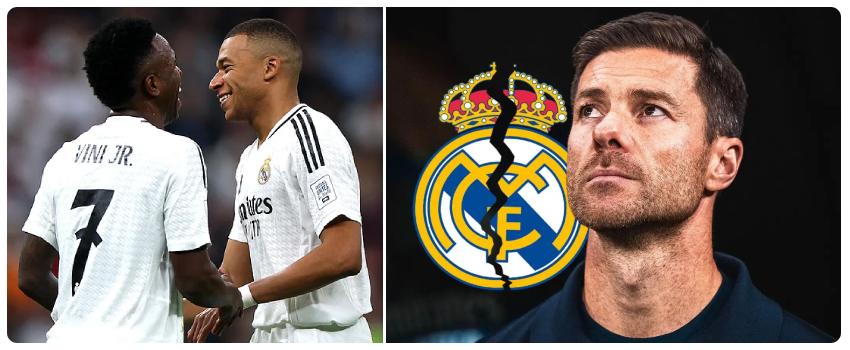
On Sunday night in Jeddah, Xabi Alonso stood before cameras talking about moving forward after Real Madrid’s 3-2 Supercopa final loss to Barcelona. “We have to move on, as soon as possible,” he told Spanish television. “It’s the least important of the competitions we play.”
Less than 24 hours later, Real Madrid had moved on without him.


The speed of his dismissal tells you everything about modern football at the Bernabéu. This was not simply about results, tactics, or trophies. This was about what happens when a coach attempts to actually coach at a club where certain players operate above the system. After 233 days in charge, Xabi Alonso discovered a painful truth: at Real Madrid, managing superstars matters more than managing football.
From Promising Start to Public Exit
Alonso’s tenure began with genuine promise. According to ESPN, Madrid won 13 of their first 14 games under his leadership. The team looked organized, purposeful, different from the fading final months under Carlo Ancelotti. A 2-1 Clásico victory over Barcelona at the Bernabéu on October 26 felt like validation that his methods were working.
Then everything collapsed.
A humiliating 5-2 derby thrashing at Atlético Madrid exposed defensive vulnerabilities. Losses to Liverpool and Manchester City in the Champions League followed. A shocking 2-0 home defeat to Celta Vigo left supporters stunned. By January, Xabi Alonso had recorded 24 wins across 34 matches with an approximate 71% win rate. He scored 72 goals while conceding 38.
Those numbers, while respectable, masked deeper problems that statistics cannot capture. I have followed managerial tenures at elite clubs for years, and few have involved such simultaneous pressure from players, the boardroom, and results all converging at once.
When the Star Becomes Untouchable
The Vinícius Júnior situation sits at the heart of this story.
From the Club World Cup in summer 2025, Alonso’s relationship with the Brazilian forward was fractured. According to reporting from ESPN, Xabi Alonso considered experimenting with Vinícius on the right wing and planned to drop him for Madrid’s semifinal with Paris Saint-Germain. Only a late injury reshuffle changed those plans. The damage was done before the season even started.
Xabi Alonso rotated Vinícius regularly, substituting him in 10 of the first 12 matches and benching him twice despite strong output. At most clubs, rotation is accepted as necessary squad management. At Real Madrid, a star’s minutes are never just minutes. They are status.
The October Clásico became the breaking point. When Alonso substituted Vinícius in the 72nd minute of a match Real Madrid were winning, television cameras captured the forward apparently shouting “I’ll leave, shall I?” as he stormed down the tunnel.
What happened next mattered more than the outburst itself. Vinícius apologized publicly in the following days. He apologized to the club. He apologized to supporters. He did not apologize to his manager.
That silence spoke louder than any press conference. When Alonso’s departure was announced, Vinícius was among a handful of players who had not posted about it on social media. Sources close to the Brazilian told ESPN that he had no plans to do so. No tribute. No acknowledgment. Nothing.
I have watched managers lose dressing rooms before. But I have never seen a player so publicly undermine his coach and face no consequences while the coach himself was eventually removed. That is not a disagreement. That is a power statement.
The Influential Minority
Vinícius was not alone. Sources close to the dressing room identified Jude Bellingham and Federico Valverde as part of a vocal minority resistant to Alonso’s methods. Bellingham publicly denied any unrest, calling reports “fabricated” and “exaggerated.” He later took to his personal app to further deny any issues with Alonso. Yet behind closed doors, he reportedly struggled to accept Alonso’s tactical vision.
Alonso tried to change the culture. He wanted improved punctuality. He wanted fewer outside figures present at training sessions. He wanted players to take their diet and physical preparation more seriously. These are not radical demands. They are baseline professional standards.
The response from certain players was rejection. Most of the squad supported Alonso, according to multiple reports. But when your three most influential players refuse to buy in, does the support of the rest truly matter?
Not everyone rejected him. Kylian Mbappé publicly thanked Alonso for his confidence and leadership, highlighting respect despite the tumultuous ending. That acknowledgment stands in stark contrast to the silence from others.
A Manager Without a President
The dysfunction extended beyond the dressing room.
Alonso’s appointment was championed by José Ángel Sánchez, the club’s director general. President Florentino Pérez was never fully convinced, viewing Alonso as a gamble despite his historic achievements at Bayer Leverkusen. That disconnect proved fatal.
Alonso wanted Martín Zubimendi, a tempo-setting midfielder he had a close relationship with from Real Sociedad. The player joined Arsenal instead. The club did not believe such a signing was necessary, pointing to existing midfield options. Sources close to the coach said he felt that decision had significantly hindered the team’s possibilities of success.
When injuries mounted and the season deteriorated, Alonso requested January reinforcements. Again, the club refused, believing the squad was sufficient until summer.
The Antonio Pintus situation crystallized the power dynamics. Alonso sidelined Madrid’s respected fitness coach at the start of his tenure. When injuries became a crisis, the club publicly pivoted, returning Pintus to prominence. A day after Alonso’s sacking, Pintus was back working with the first team alongside new manager Álvaro Arbeloa.
When your own club publicly reverses your decisions, the message to players is unmistakable: we do not trust this coach.
The Pattern Nobody Wants to Discuss
This story has echoes.
When Zinedine Zidane left his second stint in 2021, he did not talk about tactics or results. He talked about trust. He talked about how messages about his future were being leaked to the media, how he felt the club no longer had his back. The greatest player in Real Madrid history, a man who won three consecutive Champions League titles as manager, walked away because the environment became unsustainable.
Alonso faced identical pressures in a fraction of the time. Leaks to journalists. Boardroom doubt. Players operating above accountability. The cycle repeats because the underlying culture remains unchanged.
Meanwhile, Arbeloa has already lost his debut match, a 3-2 Copa del Rey elimination to third-division Albacete in the round of 16. A stoppage-time goal sealed what was both a sporting and symbolic blow.
Also Read: Shortened ISL Gets AFC Approval, but Indian Clubs Lose Direct Entry to ACL 2 Slots
Moving Forward With Dignity
Days after his dismissal, Alonso was spotted in Madrid alongside his wife, Nagore Aramburu. When fans approached him, he offered a brief but telling response: “I’m fine.”
His farewell message contained no bitterness. “It didn’t go as we would have liked,” he wrote. “Coaching Real Madrid has been an honour and a responsibility. I leave with respect, gratitude and pride that I did my best.”
The question Real Madrid must eventually answer is whether their superstar culture is sustainable. Managers will continue arriving with ideas, ambition, and credentials. Players will continue holding power that transcends any coaching authority. And the cycle will repeat until someone at the club decides that winning requires accountability at every level, not just the touchline.
Xabi Alonso learned that lesson in 233 days. The next manager will learn it too.