
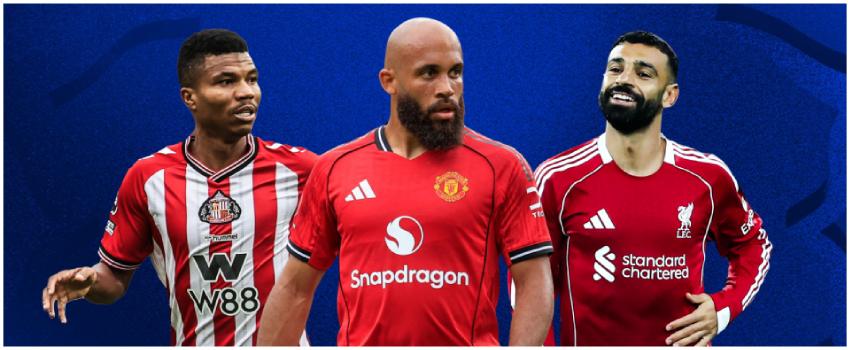
The Africa Cup of Nations (AFCON) is always a major disruption to the European football calendar, and the 2025 edition, hosted by Morocco, is set to deliver one of the most significant calendar clashes in recent memory. By cutting straight through the Premier League’s busiest period (which notably overlaps with the intense U.S. holiday football and NFL slate), the tournament guarantees that nearly every club will face a severe mid-season test of squad depth and tactical flexibility.
Premier League clubs who will be most impacted by losing players to AFCON
The confirmed dates for the AFCON Morocco 2025 tournament run from December 21, 2025, to January 18, 2026. This four-week window creates a perfect storm for Premier League managers. This period is the most densely packed run of fixtures in English football, encompassing the intense festive schedule (Boxing Day and New Year’s Day matches) and the crucial start of the domestic cup season, specifically the FA Cup Third Round.


While the loss of any player is difficult, the real impact is measured not just by the sheer number of call-ups, but by the importance and minutes logged by the players who depart. A club losing a single, world-class player who drives their entire attack may suffer more than a club losing three rotation options. For teams fighting on multiple fronts, the ability to cope with these absences could ultimately define their league campaign and cup aspirations.
Method: how we ranked “impact”
To assess which clubs are most vulnerable to the AFCON drain, we ranked the potential “impact” based on five weighted criteria. This methodology moves beyond simply counting bodies and considers the true consequence of their departure on the first-team unit. Our criteria include: the raw number of likely call-ups; the share of team minutes those departing players collectively log; their positional concentration (e.g., losing all central midfielders simultaneously is worse than losing one defender, one midfielder, and one forward); the specific fixture congestion during the window (Boxing Day, New Year, domestic cups); and the quality of cover options currently available in the squad or academy. While national associations issue call-ups with at least 15 days’ notice, official 23/27-man lists won’t be final until early to mid-December. We’ll update this page as those final confirmations drop.
The headline absences (clubs and players)
This is where the Premier League’s top clubs really start to feel the pinch. Losing key personnel over Christmas and into the New Year is far more challenging than a standard international break.
Liverpool — Mohamed Salah (Egypt)
Losing Mohamed Salah (Egypt, Group B) is the single biggest blow any club faces. Salah is arguably the league’s highest-usage, highest-impact forward, proven by him recently reaching his 250th goal for the club on November 1st against Aston Villa. His departure rips the heart out of Liverpool’s right-side attacking dynamic. Egypt is a tournament heavyweight, meaning expectations are high for them to advance deeply, suggesting Salah will be absent for most, if not all, of the four-week window. His minutes are simply irreplaceable.
Tottenham — Yves Bissouma (Mali), Pape Matar Sarr (Senegal)
Tottenham face a brutal, double hit to their midfield engine room. Both Yves Bissouma (Mali, Group A) and Pape Matar Sarr (Senegal, Group D) are first-choice ball-winners and press anchors. Spurs’ depth has improved, but simultaneously losing two players who dictate control and turnover recovery in the center of the park is hugely significant. (Note: Bissouma missed weeks in October with ankle ligament damage and had an August disciplinary omission; Sarr is fit and active. Re-scan of the squad closer to December is necessary before calling them both “definite” call-ups). The festive period demands immense energy and structure, and the burden will fall heavily on alternatives to maintain the required tempo.
Manchester United — Bryan Mbeumo (Cameroon), Amad Diallo (Ivory Coast)
Manchester United will miss new summer signing Bryan Mbeumo (Cameroon, Group F), who joined from Brentford and has become central to their attack and pressing structure. His directness and goal threat from wide areas will be tough to replicate. Furthermore, if Amad Diallo (Ivory Coast, Group F) is selected and fit following his return from injury, it means another exciting, creative winger is gone, forcing the manager to rely on others. Onana’s season-long loan means no AFCON conflict in goal.
Manchester City — Rayan Aït-Nouri (Algeria)
Manchester City’s loss of Rayan Aït-Nouri (Algeria, Group E) is a tactical subplot for Pep Guardiola. City finally secured a specialist left-back in the summer, and now Algeria’s involvement could pull him out right as the team enters the heaviest rotation stretch. The question isn’t whether City can cover the position—they can, with alternatives like Joško Gvardiol or Nathan Aké—but how the absence affects the build-up patterns that rely on a specific full-back role.
Chelsea — Low AFCON impact
With Nicolas Jackson on loan at Bayern Munich with an obligation to buy, Chelsea currently have few, if any, AFCON-bound regulars. Monitor any late call-ups but, on paper, their festive-period disruption looks light.
Newcastle United — Yoane Wissa (DR Congo)
New signing Yoane Wissa (DR Congo, Group D) profiles as a primary starter or key scoring option for Newcastle. The timing of his AFCON commitment is particularly awkward, especially if he is barely recovered from any recent knocks heading into the holiday schedule. Expect manager Eddie Howe to rotate heavily before the call-up date to ensure Wissa is fresh for his national duty but minimize the strain on the squad before he leaves.
Fulham — Alex Iwobi, Calvin Bassey (both Nigeria)
Marco Silva’s Fulham faces a genuine double whammy, losing two critical starters. Alex Iwobi (Nigeria, Group C) and Calvin Bassey (Nigeria, Group C) are vital cogs. Removing Iwobi, a creator and primary ball-carrier in midfield, and Bassey, a first-choice center-back, at once will severely test the team’s spine and defensive coherence.
Brighton — Carlos Baleba (Cameroon)
Carlos Baleba (Cameroon, Group F) has been logging significant first-team midfield minutes and is key to Brighton’s ball progression. Take him out, and the Seagulls lose a gear in their signature high-tempo transition play. Given the intensity of the Premier League midfield battles over the new year, his power and drive will be sorely missed.
Brentford — Dango Ouattara (Burkina Faso)
Club-record summer purchase Dango Ouattara (Burkina Faso, Group E) is now a likely AFCON call-up. Losing a dynamic wide outlet across the crucial festive run will tighten head coach Keith Andrews’ options significantly, especially if the team is relying on his pace for counter-attacks.
Everton — Idrissa Gana Gueye (Senegal)
The veteran Idrissa Gana Gueye (Senegal, Group D) remains a high-value defensive presence for the Toffees. His AFCON absence will significantly thin the defensive protection in front of the back four, potentially leaving the midfield exposed across key league fixtures.
Nottingham Forest — Ola Aina, Willy Boly, Ibrahim Sangaré, Taiwo Awoniyi
Nottingham Forest could face the league’s heaviest cumulative AFCON load, potentially losing multiple starters across the back line and midfield: Ola Aina (Nigeria, Group C), Willy Boly (Ivory Coast, Group F), and Ibrahim Sangaré (Ivory Coast, Group F). Striker Taiwo Awoniyi (Nigeria, Group C) is also eligible if fit and selected. Factor in Aina’s recent hamstring timeline (ruled out mid-September) when judging the likelihood of his selection, but if all four depart, the club’s defensive and midfield depth will be pushed to breaking point.
Notable Non-Absences
Ghana did not qualify for AFCON 2025, so Ghana internationals in the Premier League won’t depart. That includes Mohammed Kudus (Tottenham) and Jordan Ayew (Leicester City), who both stay with their clubs.
What fixtures will they miss?
Absences are anchored by the tournament dates: December 21, 2025, to January 18, 2026.
This window typically includes three to four rounds of league fixtures, including the critical, high-profile casualty dates:
- December 26 (Boxing Day)
- December 29/30 league matchday
- January 1 (New Year) fixtures
Beyond the league, the tournament guarantees clubs will be without their AFCON stars for the FA Cup Third Round in early January. For any teams advancing deep in the EFL Cup, the semi-finals will also fall squarely within the AFCON window. A player’s national team knock-out progress can extend their absence right up to the final day on January 18, meaning they will miss almost a full month of highly impactful, high-stakes matches.
How managers may adapt
The solution to these tactical headaches won’t be one-size-fits-all. Managers will be forced to draw on every resource available.
For Liverpool, Premier League-winning coach Arne Slot will have to fundamentally tweak his right-side dynamics without Salah’s threat and gravity. Could this mean a more central usage for players like Dominik Szoboszlai or Alexis Mac Allister, or perhaps pushing Cody Gakpo wide right to try and mimic some of Salah’s pace? That adjustment alone is a major shift.
Spurs will rely on their double pivot alternatives. The absence of Bissouma and Sarr could fast-track minutes for academy prospects or give a sustained run to players who have been rotation options. The challenge is maintaining the midfield stability that has defined their season so far.
At Manchester United, the hole left by Mbeumo means rethinking the width and pressing patterns on that side of the pitch. If Mbeumo and Amad are away, United likely redistribute usage to Matheus Cunha and Benjamin Šeško up front, with Bruno Fernandes sliding into the right half-space and the manager elevating a squad option if needed.
Manchester City’s cover strategy for Aït-Nouri at left-back is straightforward rotation between Gvardiol and Aké, but the real adaptation will be how Pep ensures their attacking build-up remains fluid when the specialist full-back is absent.
Who could be called later or return earlier?
It’s essential to remember that while we’re profiling likely absences, final national squad lists (usually 23 or 27 men) don’t drop until closer to the tournament start date. A player who is simply eligible may still be omitted. Similarly, players just returning to fitness—like Taiwo Awoniyi or Ola Aina at Forest (who has been ruled out with a hamstring injury since mid-September)—may not be selected despite their talent if their recovery timeline is too tight.
On the other end of the spectrum, early national team exits can shorten absences dramatically. A player whose team is knocked out in the group stage or round of 16 will return to club duty sooner, potentially making it back for the mid-January league run. Conversely, finalists will miss the entire window. For the most accurate, up-to-the-minute information, readers should check official club and FA announcements in the week of December 9–16.
Quick club-by-club checklist
To summarize the potential disruption across the Premier League:
- High Impact: Nottingham Forest, Tottenham, Liverpool, Manchester United (due to irreplaceable minutes or high number of starters lost).
- Medium Impact: Manchester City, Fulham, Newcastle, Brighton, Brentford, Everton (due to losing one or two critical starters that demand tactical adjustment).
- Low Impact: Chelsea, The remaining Premier League clubs (either have few or zero AFCON-eligible regulars, making the window far easier to navigate).
| Club | Likely AFCON 2025 Absentees | AFCON Group | Impact Level |
| Nottingham Forest | Aina, Boly, Sangaré, Awoniyi | C, F, F, C | High |
| Liverpool | Mohamed Salah | B | High |
| Tottenham | Bissouma, Sarr | A, D | High |
| Manchester United | Bryan Mbeumo, Amad Diallo | F, F | High |
| Fulham | Alex Iwobi, Calvin Bassey | C, C | Medium |
| Manchester City | Rayan Aït-Nouri | E | Medium |
| Newcastle United | Yoane Wissa | D | Medium |
| Brighton | Carlos Baleba | F | Medium |
| Brentford | Dango Ouattara | E | Medium |
| Everton | Idrissa Gana Gueye | D | Medium |
| Chelsea | (Few to None) | N/A | Low |
We’ll be updating this page constantly as final call-ups are confirmed. Make sure to bookmark this article and revisit it after the squads are officially announced!
Also Read: Rooney’s Criticism Addressed as Ruben Amorim insists his System isn’t to Blame for United Struggles
AFCON 2025 FAQs
When does AFCON 2025 start and finish?
The tournament runs from December 21, 2025, to January 18, 2026.
Why isn’t Mohammed Kudus leaving Spurs?
Kudus’s national team, Ghana, did not qualify for the AFCON 2025 tournament in Morocco. Therefore, he remains available for all Tottenham club duties during the window.