
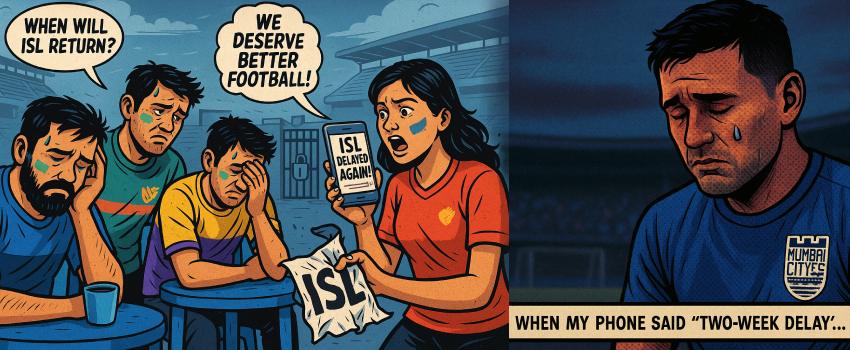
The question echoing across Indian football circles is a worrying one: Is there no ISL this year? As August rolls in, the familiar pre-season buzz of the Indian Super League is notably absent, replaced by a growing silence that has left many fans anxious. But here’s the crucial clarification: the ISL is not cancelled. It is part of a planned, strategic delay, a one-time transitional period required to undertake the most significant overhaul in the history of Indian domestic football. This is not a step back, but a bold leap forward—a “great reset” designed to bring the entire sport in line with global standards.
This article will break down exactly why this monumental shift is happening, what the new structure of Indian football will look like, and what this pivotal transitional season means for clubs, players, and, most importantly, the millions of passionate fans. The short-term pain of a season without top-flight league football is a necessary sacrifice for a long-term vision of a more competitive, viable, and sustainable football ecosystem.


The Core Reason: The Great Indian Football Calendar Reset
For years, Indian football has been plagued by a fundamental flaw: a fragmented and disjointed calendar. The old system was out of sync with the rest of the world. A typical season consisted of a short, four to five-month ISL campaign, followed by a brief Super Cup, and then a long, unproductive off-season that lasted for over half the year. This stop-start schedule was an immense obstacle to player development, as it limited consistent match minutes and left a large gap where players would lose their match fitness. It also made India an outlier among top footballing nations.
This overhaul is a direct mandate from the All India Football Federation (AIFF), acting in close alignment with directives from the Asian Football Confederation (AFC). The goal is to create a unified, longer football season that spans at least nine months, from approximately September to May, mirroring the calendars of the world’s most successful leagues. You cannot simply flip a switch from a four-month season to a nine-month one; a transitional year is essential. The 2025-26 season is that one-time buffer, allowing every club to reset their calendars, realign their finances, and prepare for the rigors of a new, extended format that is set to launch in 2026.
Deconstructing the New Three-Tiered League System
The ultimate objective of this calendar reset is the creation of a single, interconnected football pyramid. This new structure is designed to instill sporting merit and provide a clear pathway for every club, no matter how small, to dream of reaching the pinnacle of Indian football.
Tier 1: Indian Super League (ISL): The ISL will retain its position as the undisputed, top-tier league in the country. However, its new schedule will see it run from September 2026 to May 2027, with the potential for more matches and a greater sense of continuity. Crucially, this longer, more structured format paves the way for the eventual introduction of promotion and relegation. This has been the holy grail for Indian football fans for years, as it adds a new layer of drama, competition, and sporting integrity to the entire pyramid.
Tier 2: League 1 (Formerly the I-League): Now officially sanctioned as the second division, League 1 will run parallel to the ISL. Its role is to serve as the direct feeder league, where the champion will eventually earn the right to be promoted to the top-flight ISL. This solidifies its importance and creates a clear, tangible reward for success at the second tier.
Tier 3: League 2 and Below: This is the foundation of the pyramid. It provides a structured pathway for clubs from state leagues and smaller regional competitions to climb the ladder, with the ultimate goal of one day reaching the professional leagues above. This system ensures that Indian football isn’t just about the top clubs but about building a broad, deep talent pool from the ground up.
The Transitional 2025-26 Season: What Happens Now?
With no ISL to watch on a weekly basis, fans are rightly asking what will fill the void. This year will see a massive resurgence of India’s historic cup competitions, which will take center stage. The venerable Federation Cup, a storied tournament that once served as India’s premier cup competition, will be the main knockout tournament for the 2025-26 season. Additionally, the Durand Cup is expected to hold significant importance.
For clubs, this is a crucial preparatory year. It’s an opportunity to restructure their finances, strengthen their squads for the demands of a longer season, and improve their infrastructure without the pressure of weekly league matches. This time allows them to better align with the new licensing criteria being implemented by the AFC, ensuring that they are ready to compete at a higher level in the future. For players, while the lack of league football is a challenge, the cup competitions and national team camps will be vital for keeping them match-fit and in form.
The Ripple Effects: Short-Term Pain for Long-Term Gain?
This strategic pause is not without its risks and challenges. The immediate downsides are significant and cannot be ignored.
On the one hand, there is a real risk of fan disengagement. Football culture thrives on weekly matches, and a year without the ISL could test the loyalty of even the most dedicated supporters. Additionally, the financial strain on clubs is a major concern. Many clubs rely heavily on the broadcast revenue and gate receipts from the ISL, and a year without this primary income source will be a significant challenge to their bottom line. Players, particularly those not on long-term contracts, also face uncertainty regarding their playing time and future prospects.
However, the long-term benefits are arguably far greater. A longer season means more consistent matches for players (30+ per season), which is a key factor in improving player development and reducing rustiness. For the national team, this is a game-changer. It ensures the coach has a pool of consistently match-fit players for crucial international windows. Furthermore, the extended calendar isn’t just a boon for players and the national team; it’s a foundational step for building a more vibrant fan culture. A nine-month season allows for more home and away matches, creating a more consistent rhythm for supporters. This increased frequency of games fosters deeper rivalries and gives clubs the chance to build a more permanent connection with their communities, moving beyond a brief, seasonal affair to a year-round passion. From a commercial standpoint, a structured, year-round football calendar is far more attractive to broadcasters and sponsors, ensuring the financial viability of the sport for years to come. Most importantly, it creates a true footballing pyramid with a clear path from the bottom to the top, finally placing sporting merit at the heart of Indian football.
Also Read: Who Will Be the Biggest Disappointment In 2025-26 Premier League?
Conclusion: A Necessary Gamble for a Brighter Future
The delay of the Indian Super League is not a sign of failure, but rather a bold and strategic decision to address the fundamental problems that have held Indian football back for decades. This one-year hiatus is a short-term sacrifice for what the AIFF hopes will be a long-term gain—a professional, unified, and competitive football ecosystem that can finally align with the standards of the rest of the world. The 2026-27 season will be the first true test of this monumental reset, and its success will define the future of the sport in India for generations to come.